
Shoulder to Hip Ratio Calculator
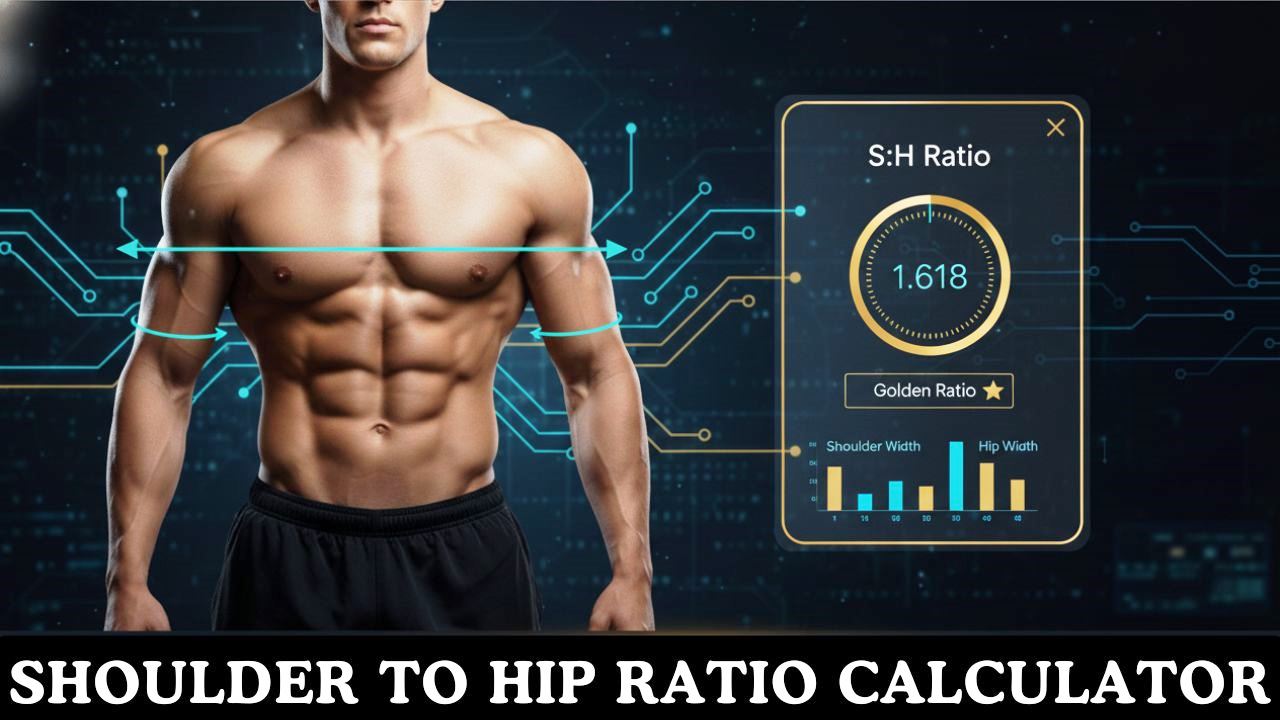
What is Shoulder-to-Hip Ratio (SHR)?
Shoulder-to-Hip Ratio (SHR) compares the width of your shoulders to your hips. It’s a key aesthetic measurement used in bodybuilding, fitness competitions, and athletic development to assess upper body proportions.
Unlike Waist-to-Hip Ratio (which measures health), SHR focuses purely on aesthetic appearance and the coveted “V-taper” physique—broad shoulders tapering down to a narrow waist and hips.
Why It Matters: A high SHR creates the illusion of a powerful, athletic build. It’s the difference between looking “average” and looking like a trained athlete or physique competitor.
The V-Taper Aesthetic
The V-taper is considered the gold standard in bodybuilding and fitness aesthetics. It’s characterized by:
Wide Shoulders: Developed lateral and rear deltoids that create width at the top.
Narrow Waist: Low body fat and developed obliques (but not overdeveloped) for a tight midsection.
Proportionate Hips: Relatively narrow hip structure that contrasts with shoulder width.
Classic bodybuilders like Steve Reeves, Arnold Schwarzenegger, and modern physique competitors exemplify this ideal ratio—broad on top, narrow at the bottom.
How to Calculate Shoulder-to-Hip Ratio
This ratio reveals your upper-to-lower body proportions and V-taper development.
Hips: 36 inches (91 cm)
SHR: 52 ÷ 36 = 1.44
Category: Very Good (competitive bodybuilder range)
Result: Strong V-taper with excellent proportions
Hips: 36 inches (91 cm)
SHR: 42 ÷ 36 = 1.17
Category: Good (solid athletic proportions)
Result: Balanced physique with room for improvement
Ideal SHR Standards by Gender and Goal
Men’s SHR Targets
| Category | SHR Range | Description | Example |
|---|---|---|---|
| Excellent | 1.50+ | Elite bodybuilder/physique competitor | Shoulders 54″ / Hips 36″ = 1.50 |
| Very Good | 1.40-1.49 | Competitive bodybuilder level | Shoulders 52″ / Hips 36″ = 1.44 |
| Good | 1.30-1.39 | Athletic/fitness enthusiast | Shoulders 48″ / Hips 36″ = 1.33 |
| Average | 1.20-1.29 | Balanced proportions, room to improve | Shoulders 46″ / Hips 37″ = 1.24 |
| Needs Work | Below 1.20 | Narrow shoulders, priority development needed | Shoulders 44″ / Hips 38″ = 1.16 |
Note: Most natural bodybuilders achieve 1.40-1.50 SHR at peak condition. Ratios above 1.55 are rare and typically seen in enhanced athletes or genetic outliers.
Women’s SHR Targets
| Category | SHR Range | Description | Example |
|---|---|---|---|
| Excellent | 1.40+ | Elite fitness competitor physique | Shoulders 46″ / Hips 33″ = 1.39 |
| Very Good | 1.30-1.39 | Fitness/figure competitor level | Shoulders 44″ / Hips 34″ = 1.29 |
| Good | 1.20-1.29 | Athletic build with visible taper | Shoulders 42″ / Hips 35″ = 1.20 |
| Average | 1.10-1.19 | Balanced proportions | Shoulders 40″ / Hips 36″ = 1.11 |
| Needs Work | Below 1.10 | Narrow shoulders, focus needed | Shoulders 38″ / Hips 37″ = 1.03 |
Note: Women naturally have wider hips relative to shoulders due to skeletal structure. Target SHR is lower than men’s, but the aesthetic principle remains the same—visible shoulder width creates an athletic appearance.
How to Measure Correctly
Shoulder Circumference Measurement
Location: Measure around the shoulders at the widest point—across the deltoids (shoulder muscles), not bone-to-bone width.
Technique:
• Stand upright with relaxed posture (don’t flex)
• Arms hanging naturally at sides
• Wrap tape measure around shoulders at deltoid level
• Tape should cross over the top of the shoulders
• Keep tape parallel to the floor
• Measure over a thin shirt for consistency
Common Mistake: Measuring bone-to-bone shoulder width (bi-acromial width) instead of circumference around the shoulders. We need circumference for this ratio.
Hip Circumference Measurement
Location: Measure around hips at the widest point—typically across the buttocks/gluteus maximus.
Technique:
• Stand with feet together
• Find widest part of hips (usually 7-9 inches below waist)
• Wrap tape around fullest part of buttocks
• Keep tape parallel to floor
• Tape should lie flat without compression
• Don’t flex glutes—measure relaxed
Tip: Hip measurement for SHR is the same as for Waist-to-Hip Ratio. Use a mirror to ensure tape is level.
Measurement Best Practices
Timing: Measure in the morning before training for consistency. Muscles can temporarily increase after workouts (“pump”).
Clothing: Wear thin, fitted clothing or measure directly on skin for accuracy.
Frequency: Remeasure every 4-6 weeks to track development. Daily/weekly variations are normal and misleading.
Tools: Use a flexible fabric tape measure. Have someone help or use a mirror for shoulder measurement accuracy.
Documentation: Take progress photos from front and back in same lighting/posing to visually track V-taper development.
⚠️ Important Disclaimer
This calculator is for aesthetic and fitness purposes only. It is not a medical tool and does not assess health risks.
Individuals with shoulder injuries, rotator cuff issues, or impingement syndrome should seek medical clearance before beginning shoulder-focused training programs.
Body proportions are influenced by genetics (bone structure). While muscle development is highly trainable, skeletal structure cannot be changed. Set realistic expectations based on your individual anatomy.
