
Ideal Waist Size Calculator
Calculate your ideal waist circumference using science-backed methods for optimal health and aesthetics
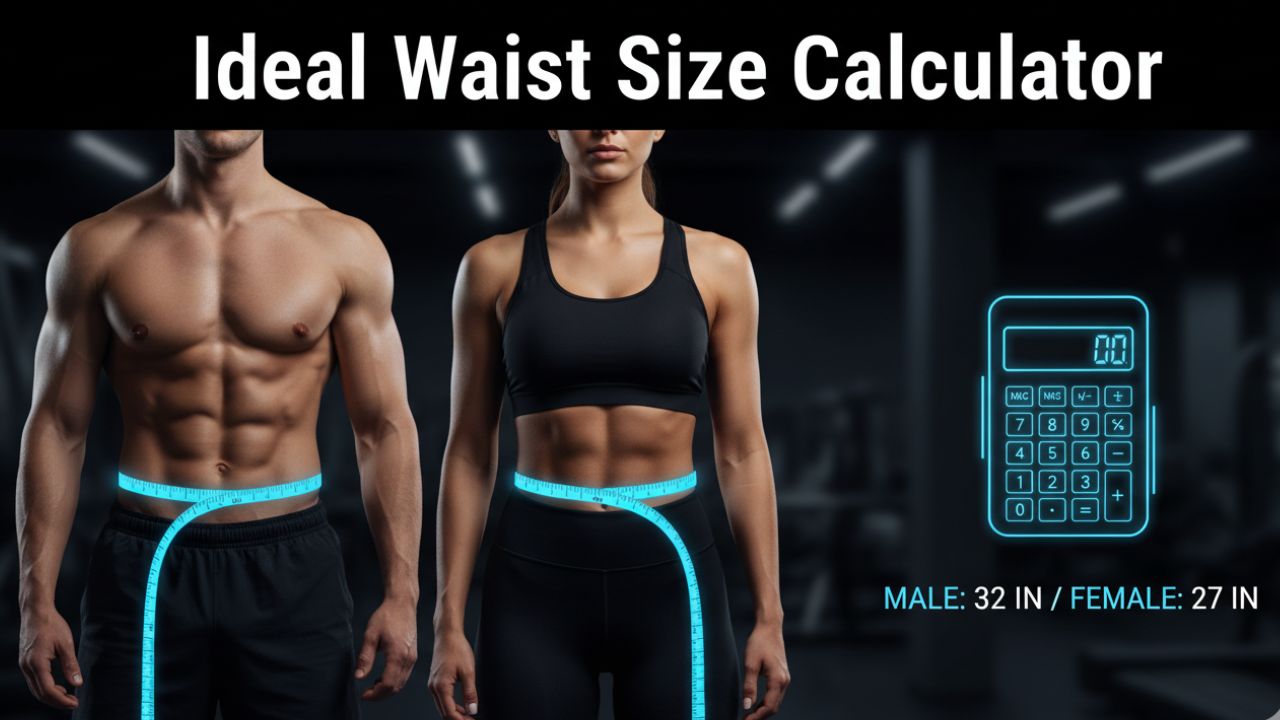
What is Ideal Waist Size?
Ideal waist size refers to waist circumference measurements that promote optimal health, reduce health risk, and create aesthetically pleasing body proportions.
Scientific research consistently shows that waist-to-height ratio (WHtR) is the most reliable predictor of health risk across all age groups and ethnicities.
The simple rule: keep your waist circumference less than half your height. This calculator combines health standards (0.5 WHtR), aesthetic proportions (0.447 ratio), and shoulder-to-waist ratios (1.6:1 ideal) for comprehensive analysis.
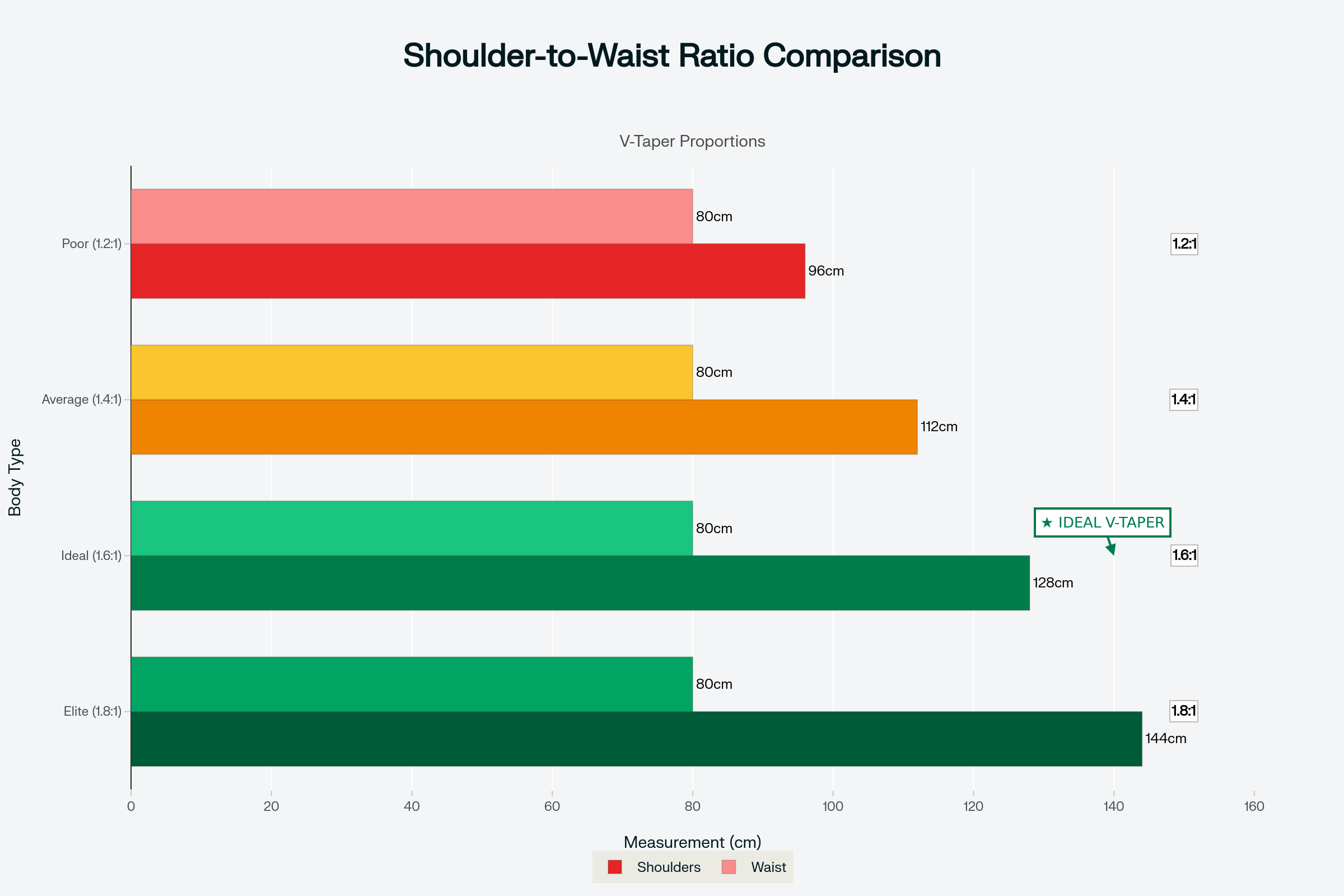
Visual comparison of different shoulder-to-waist ratios and their aesthetic impact
Why Waist Size Matters More Than Weight
Two people with identical weight and height can have drastically different health outcomes based solely on waist circumference.
Beyond health, waist size determines visual appeal. The V-taper physique—wide shoulders tapering to narrow waist—is universally perceived as attractive and athletic.
A 1.6:1 shoulder-to-waist ratio creates this classical proportion admired across cultures and throughout history.
How to Calculate Ideal Waist Size
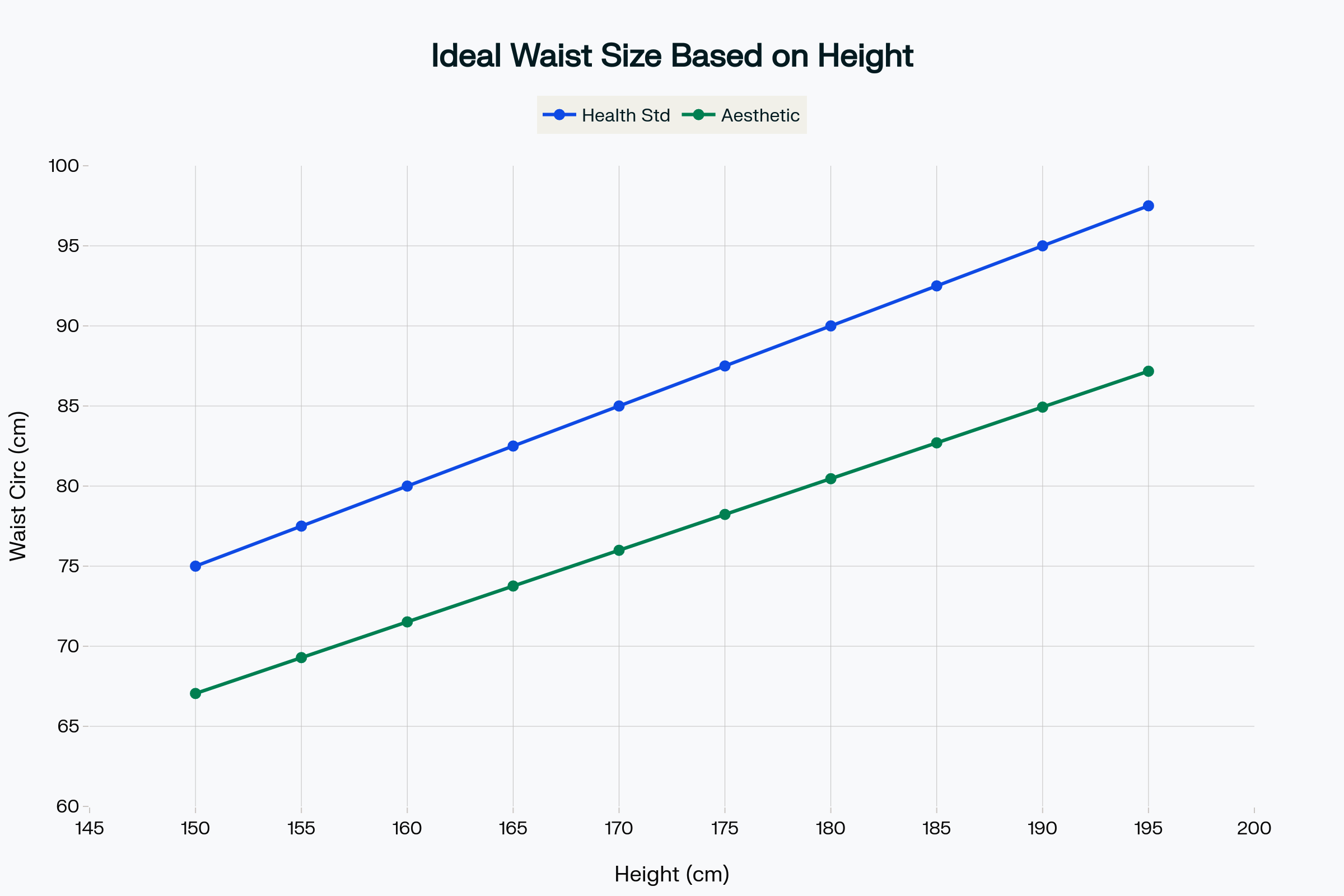
Comparison of health-based vs aesthetic-based ideal waist measurements across different heights
Calculation: 70.9 × 0.5 = 35.4 inches (90 cm)
WHtR: 35.4 ÷ 70.9 = 0.50
Result: Ideal waist = 35.4 inches for optimal health
Calculation: 70.9 × 0.447 = 31.7 inches (80.5 cm)
Result: Aesthetic ideal waist = 31.7 inches
Note: This creates maximum visual appeal and V-taper effect
Calculation: 18.9 ÷ 1.6 = 11.8 inches (30 cm)
Current Ratio Check: 18.9 ÷ 11.8 = 1.6:1 ✓
Result: Perfect V-taper proportions
Aesthetic Method: 31.7 inches (80.5 cm)
Proportional Method: 30 inches (76.2 cm)
Average: (35.4 + 31.7 + 30) / 3 = 32.4 inches (82.2 cm)
Body Type (Mesomorph): 32.4 × 1.0 = 32.4 inches (82.2 cm)
Goal (Aesthetics): 32.4 × 0.98 = 31.7 inches (80.6 cm)
Age (25 years): 31.7 × 1.0 = 31.7 inches (80.6 cm)
Final Ideal: 31.7 inches (80.6 cm)
Health Risk Assessment (WHtR)
| WHtR Range | Health Risk Level | Recommended Action |
|---|---|---|
| < 0.43 | Excellent (Very Low Risk) | Maintain current lifestyle and measurements |
| 0.43 – 0.49 | Good (Low Risk) | Continue healthy habits, minor improvements possible |
| 0.50 – 0.57 | Fair (Moderate Risk) | Begin waist reduction program – diet and exercise focus |
| ≥ 0.58 | High Risk (Increased Disease Risk) | Immediate intervention required – consult healthcare professional |
How to Measure Waist Correctly
Accurate Waist Measurement Technique
Step 1: Stand upright, breathe normally, don’t suck in
Step 2: Locate belly button (umbilicus) as reference point
Step 3: Wrap tape measure around waist at belly button level
Step 4: Keep tape parallel to floor, snug but not tight
Step 5: Measure at end of normal exhale
Step 6: Record measurement to nearest 0.1 cm or ⅛ inch
Common Mistakes to Avoid:
• Measuring after meals (wait 2+ hours)
• Sucking in stomach (provides false reading)
• Measuring at narrowest point (clinical measurement is at belly button)
• Pulling tape too tight (compresses tissue)
• Inconsistent measurement location between sessions
⚕️ Medical Disclaimer
This ideal waist size calculator provides estimates based on anthropometric formulas and health research for educational purposes only. Results do not constitute medical advice, diagnosis, or treatment. Individual ideal waist measurements vary based on genetics, age, ethnicity, body composition, and overall health status. Consult with healthcare professionals, registered dietitians, or certified fitness trainers before starting any new diet or exercise program, especially if you have pre-existing medical conditions, cardiovascular disease, diabetes, or metabolic disorders.
