
Ideal Shoulder Size Calculator
Calculate your ideal shoulder width using Golden Ratio and scientific methods – get your V-Taper score
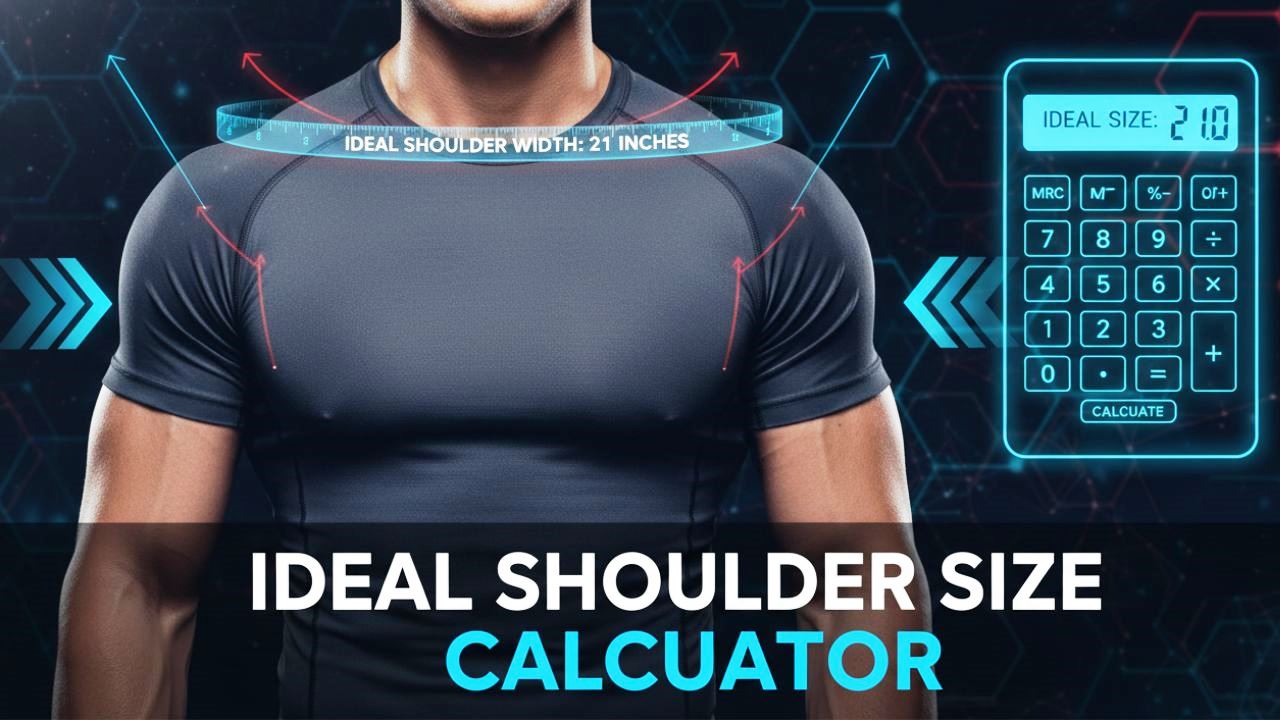
What is Ideal Shoulder Size?
Ideal shoulder size is the width measurement that creates the most aesthetically balanced physique proportional to your height, waist, and frame. Wide shoulders create the V-taper physique, which research shows is the #1 visual indicator of attractiveness and physical fitness.
For men, broad shoulders signal strength, dominance, and genetic fitness. Studies show that a shoulder-to-waist ratio above 1.6:1 is rated most attractive across all cultures. This proportion creates the classic V-shaped torso that bodybuilders and athletes work to achieve.
Your bone structure (measured via wrist circumference) sets your genetic frame size. Training can expand shoulder width by building deltoid muscles, but your skeletal structure determines your maximum potential.
How to Calculate Ideal Shoulder Width
Golden Ratio Target: 32 × 1.618 = 51.8 inches
Height Limit: 70 × 0.28 = 19.6 inches
Smart Golden Ratio: 19.6 inches (49.8 cm)
Ratio: 19.6 ÷ 32 = 0.61:1 (needs shoulder development)
Golden Ratio Target: 28 × 1.618 = 45.3 inches
Height Limit: 70 × 0.28 = 19.6 inches
Smart Golden Ratio: 19.6 inches (49.8 cm)
Ratio: 19.6 ÷ 28 = 0.70:1 (better, but still needs development)
Calculation: 178 × 0.245 = 43.6 cm (17.2 inches)
Result: Conservative proportional bi-acromial width
Calculation: 163 × 0.225 = 36.7 cm (14.4 inches)
Result: Conservative proportional female shoulder width
Calculation: 17.8 × 4.8 = 85.4 cm = 33.6 inches
Result: Realistic maximum shoulder potential based on bone structure
Calculation: 178 ÷ 4.8 = 37.1 cm (14.6 inches)
Result: Conservative anatomical bi-acromial bone-to-bone measurement
Height-Based: 17.2 inches (43.6 cm)
Wrist-Based: 33.6 inches (85.4 cm)
Bi-Acromial: 14.6 inches (37.1 cm)
Weighted Average: (19.6×0.25) + (17.2×0.35) + (33.6×0.25) + (14.6×0.15) = 20.4 inches
Body Type (Meso ×1.0): 20.4 inches
Goal (Aesthetics ×1.0): 20.4 inches (51.8 cm)
Final Ideal: 20.4 inches (51.8 cm)
Shoulder-to-Waist Ratio Standards
| Ratio | Category | Description | Visual Appearance |
|---|---|---|---|
| 1.7+ | Elite | Competition bodybuilder/physique competitor level | Extreme V-taper, very wide shoulders |
| 1.6-1.69 | Excellent | Classic aesthetic ideal (Golden Ratio) | Strong V-taper, highly attractive proportions |
| 1.5-1.59 | Good | Athletic appearance, visibly muscular | Moderate V-taper, above-average physique |
| 1.4-1.49 | Fair | Average proportions, healthy appearance | Slight V-taper, room for improvement |
| Below 1.4 | Needs Work | Narrow shoulders relative to waist | Limited V-taper, focus on shoulder training |
Body Types and Shoulder Development
| Body Type | Frame Characteristics | Shoulder Potential | Training Focus |
|---|---|---|---|
| Ectomorph | Narrow frame, small wrists/ankles, lean | Lower genetic ceiling, harder to build mass | Heavy compound lifts, caloric surplus, frequent training |
| Mesomorph | Medium frame, athletic build, naturally muscular | Highest potential, responds well to training | Balanced volume, progressive overload, maintain leanness |
| Endomorph | Broad frame, thick bones, easy to gain mass | High potential, but must manage body fat | Focus on form, control, and waist management |
How to Measure Shoulders Correctly
Method 1: Bi-Acromial Width (Bone-to-Bone)
Stand straight with arms relaxed at your sides. Locate the bony points at the top of each shoulder (acromion process). Measure the straight-line distance between these two points.
This is the most accurate measurement for tracking skeletal frame size. It’s not affected by muscle mass or body fat.
Method 2: Shoulder Circumference
Stand with arms at sides. Wrap the measuring tape around the widest part of your shoulders, keeping it parallel to the ground. The tape should pass over the deltoid muscles.
This measurement includes muscle mass and is useful for tracking deltoid development over time.
Measurement Tips
Always measure at the same time of day (morning is best, before pump). Use a flexible tape measure. Have someone help you for the most accurate reading. Take three measurements and use the average.
Average Shoulder Sizes (Reference Data)
| Training Level | Bi-Acromial Width (Men) | Bi-Acromial Width (Women) | Training Duration |
|---|---|---|---|
| Beginner | 16.0-17.5 inches (41-44 cm) |
14.0-15.5 inches (36-39 cm) |
0-1 years |
| Intermediate | 17.5-19.0 inches (44-48 cm) |
15.5-16.5 inches (39-42 cm) |
1-3 years |
| Advanced | 19.0-20.5 inches (48-52 cm) |
16.5-17.5 inches (42-44 cm) |
3-5 years |
| Elite | 20.5-22.0 inches (52-56 cm) |
17.5-18.5 inches (44-47 cm) |
5+ years |
Frequently Asked Questions
What is the ideal shoulder-to-waist ratio?
The ideal shoulder-to-waist ratio is 1.6:1, based on the Golden Ratio (1.618). This proportion is rated most attractive across cultures and represents the classic V-taper physique. Ratios above 1.7:1 are elite bodybuilder level, while 1.4-1.5:1 is good for athletic appearance.
Can you make your shoulders wider naturally?
Yes, but only to the limit set by your bone structure. You can expand shoulder width 2-4 inches by building deltoid muscles through targeted training. Your skeletal frame (measured via wrist size) determines your genetic ceiling. Focus on overhead pressing and lateral raises for best results.
How long does it take to build broader shoulders?
Noticeable shoulder growth takes 3-6 months of consistent training. Adding 1-2 inches of shoulder width typically requires 1-2 years. Reaching your genetic potential takes 3-5 years of progressive training with proper nutrition.
What shoulder width is considered broad for men?
Bi-acromial width above 19 inches (48 cm) is considered broad for men. Average is 17-19 inches (43-48 cm). Elite athletes and bodybuilders have 20-22 inches (51-56 cm). Your height and frame size determine your ideal personal target.
Should I train shoulders if I have narrow clavicles?
Yes! While you can’t change bone structure, building deltoid muscles adds significant visual width. Focus on side delt training (lateral raises) and overhead pressing. Also maintain a lean waist to maximize your shoulder-to-waist ratio, which is what creates the V-taper appearance.
⚠️ Medical Disclaimer
This calculator provides estimates for aesthetic and fitness goals, not medical advice. Shoulder development is limited by genetics, bone structure, and training history.
Consult a healthcare provider before starting any new training program, especially if you have shoulder injuries or joint issues. Proper form and progressive overload are essential to prevent injury.
