
Ideal Neck Size Calculator
What is Ideal Neck Size?
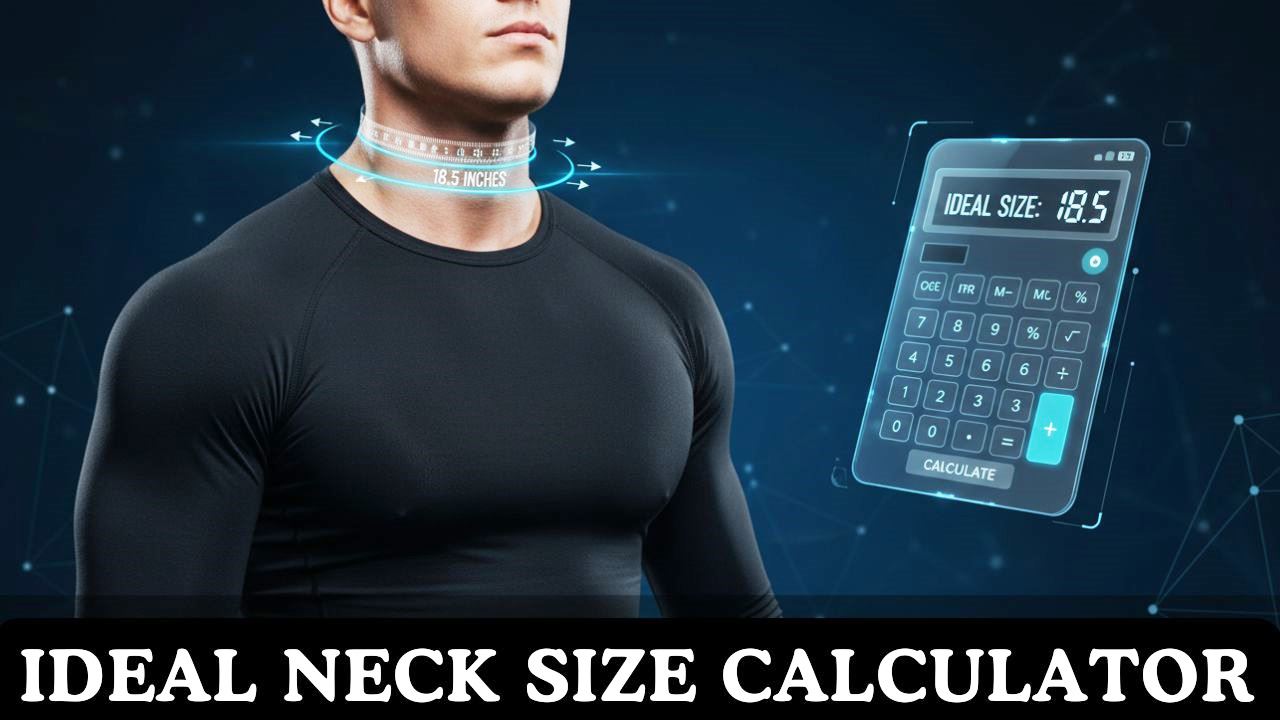
Ideal neck size means having a neck that is proportional to your body frame, supports proper posture, and doesn’t pose health risks. Your neck circumference matters for three key reasons: health assessment, functional strength, and aesthetic balance.
From a health perspective, neck size is a clinical indicator. Doctors use it to screen for sleep apnea risk and cardiovascular disease. Large neck circumference (over 17 inches for men, 16 inches for women) significantly increases obstructive sleep apnea risk.
For athletics and strength sports, a strong neck prevents injury in contact sports, improves performance in wrestling and football, and creates stability for heavy lifts. Your ideal neck size depends on your bone structure (wrist thickness), height, body weight, and training goals.
How to Calculate Ideal Neck Size
Calculation: 17.8 × 2.2 = 39.2 cm = 15.4 inches
Result: Proportional to bone structure
Note: Classic ratio – neck approximates 85-90% of bicep size
Calculation: 15.2 × 2.0 = 30.4 cm = 12.0 inches
Result: Feminine neck proportions
Calculation: 178 × 0.21 = 37.4 cm = 14.7 inches
Result: Proportional to total height
Calculation: 163 × 0.19 = 31.0 cm = 12.2 inches
Result: Balanced neck-to-height ratio
Weight: 176 lbs (80 kg)
BMI: 80 ÷ (1.78²) = 25.2
Height-Based Neck: 178 × 0.21 = 37.4 cm = 14.7 inches
BMI Adjustment: 1 + (25.2 – 22) / 100 = 1.032
Weight-Adjusted Neck: 14.7 × 1.032 = 15.2 inches (38.6 cm)
Result: Slightly larger neck for higher BMI
Weight: 130 lbs (59 kg)
BMI: 59 ÷ (1.63²) = 22.2
Height-Based Neck: 163 × 0.21 = 34.2 cm = 13.5 inches
BMI Adjustment: 1 + (22.2 – 22) / 100 = 1.002
Weight-Adjusted Neck: 13.5 × 1.002 = 13.5 inches (34.3 cm)
Result: Close to baseline (BMI near 22 = minimal adjustment)
Height (70″ / 178 cm): 178 × 0.21 = 37.4 cm = 14.7 inches
Weight (176 lbs / 80 kg, BMI 25.2): 14.7 × 1.032 = 15.2 inches
Weighted Average: (15.4×0.35) + (14.7×0.35) + (15.2×0.30) = 15.1 inches
Body Type (Meso ×1.0): 15.1 inches
Goal (Combat ×1.04): 15.7 inches (39.9 cm)
Final Ideal: 15.7 inches
Note: All methods now produce realistic, comparable results
Body Types and Neck Development
| Body Type | Characteristics | Neck Potential | Training Focus |
|---|---|---|---|
| Ectomorph | Thin neck naturally, narrow shoulders, fast metabolism | Slightly lower (×0.97) | Progressive resistance, higher frequency |
| Mesomorph | Athletic build, responds well to training | Standard (×1.0) | Balanced approach works best |
| Endomorph | Thicker neck naturally, broader frame | Slightly higher (×1.03) | Focus on definition and posture |
How to Measure Neck Correctly
Accurate Neck Measurement Technique
Step 1: Stand or sit with head in neutral position (looking straight ahead).
Step 2: Locate Adam’s apple (thyroid cartilage) – this is your measurement landmark.
Step 3: Wrap tape measure around neck at Adam’s apple level, keeping tape parallel to floor.
Step 4: Keep tape snug but not compressing soft tissue. You should fit one finger under the tape.
Step 5: Take measurement during normal breathing, not inhaling or swallowing.
Step 6: Record to nearest 0.1 inch or 0.5 cm.
For Dress Shirts: Your collar size is typically 0.5 inches (1.3 cm) larger than your actual neck measurement for comfort. If your neck measures 15.5 inches, buy a size 16 collar.
Common Mistakes: Don’t measure with chin raised or lowered. Avoid measuring immediately after training when muscles are pumped. Don’t pull tape too tight or leave it loose.
Average Neck Sizes (Reference Data)
| Training Level | Male Average | Female Average | Description |
|---|---|---|---|
| Untrained | 14.5-15.5 inches (37-39 cm) |
12.5-13.5 inches (32-34 cm) |
Average adult, no specific neck training |
| Recreational Athlete | 15.5-16.5 inches (39-42 cm) |
13.5-14.5 inches (34-37 cm) |
Regular gym training, some neck work |
| Competitive Athlete | 16.5-17.5 inches (42-44 cm) |
14.5-15.5 inches (37-39 cm) |
Dedicated neck training, contact sports |
| Elite Contact Sports | 17.5-19 inches (44-48 cm) |
15.5-16.5 inches (39-42 cm) |
Professional football, rugby, wrestling |
⚕️ Medical Disclaimer
This neck size calculator provides estimates for educational purposes only. Results do not constitute medical advice. Neck circumference health risks depend on multiple factors including body composition, genetics, age, and medical history.
Neck training carries injury risk if performed incorrectly. Never train neck muscles without proper instruction, warm-up, and progressive loading. Stop immediately if you experience sharp pain, numbness, tingling, or dizziness. Consult qualified trainers or physical therapists before starting neck training programs.
