
Ideal Hip Size Calculator
Calculate your ideal hip measurements using science-backed methods for optimal health, aesthetics, and glute development
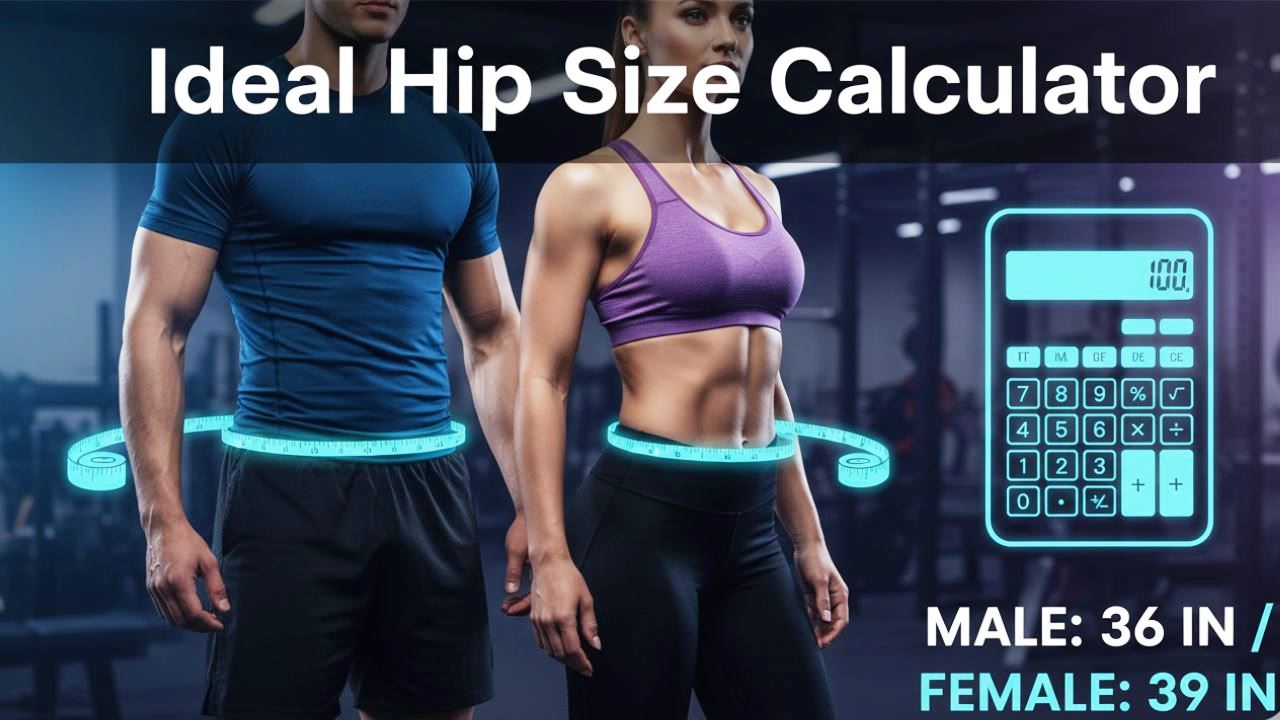
What is Ideal Hip Size?
Ideal hip size refers to hip circumference measurements that promote optimal health, indicate adequate gluteal muscle development, and create aesthetically pleasing body proportions. Unlike arbitrary standards, ideal hip size is highly individual—determined by gender, height, waist circumference, body type, and training goals.
Scientific research emphasizes the hip-to-waist ratio (HWR) as a critical health indicator. For men, ratios below 0.95 correlate with reduced cardiovascular disease and metabolic syndrome risk.
For women, ratios between 0.67-0.80 (optimal 0.7) are associated with fertility, health, and universal attractiveness across cultures.
Hip measurement reflects both gluteal muscle mass and subcutaneous fat distribution—both important for different reasons.
Why Hip Size Matters for Health and Aesthetics
Health Significance: Hip circumference indicates gluteal muscle mass (largest muscle group in body) and subcutaneous fat reserves.
Research shows individuals with higher hip measurements relative to waist have significantly lower risk of cardiovascular disease, diabetes, and all-cause mortality.
This “pear-shaped” fat distribution is metabolically protective compared to “apple-shaped” visceral fat accumulation around organs.
Aesthetic Importance: Well-developed hips create visual balance and proportion. For men, moderate hip development supports the V-taper physique when combined with broad shoulders and narrow waist.
For women, fuller hips create the hourglass figure—waist-to-hip ratio of 0.7 is consistently rated most attractive across cultures and throughout history. Strong glutes also enhance athletic performance in running, jumping, and power movements.
How to Calculate Ideal Hip Size
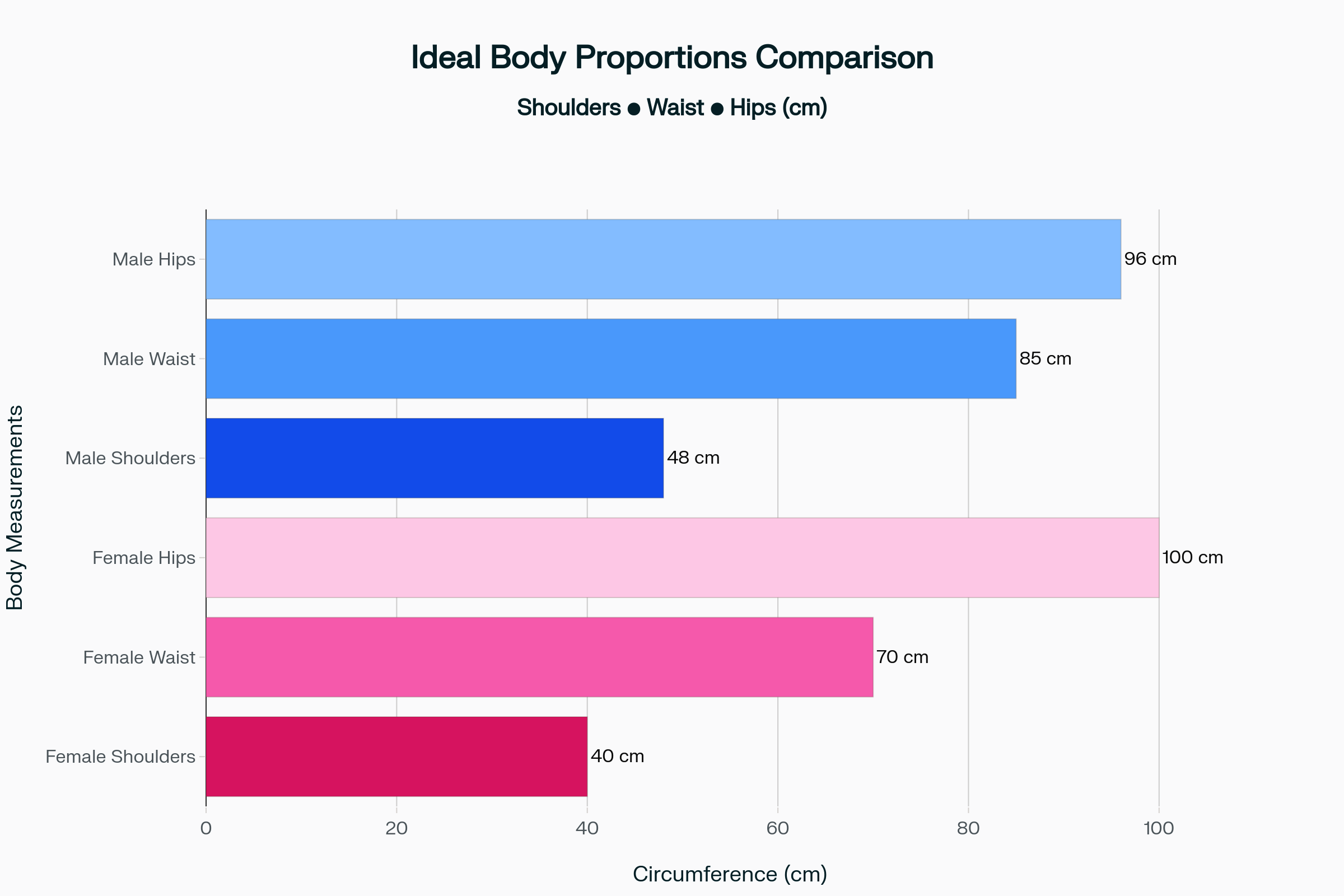
Visual guide to ideal hip proportions and measurements
Target HWR: 0.92
Calculation: 33.5 ÷ 0.92 = 36.4 inches (92.4 cm)
Result: Ideal hip = 36.4 inches for optimal health
Target HWR: 0.70
Calculation: 27.6 ÷ 0.70 = 39.4 inches (100 cm)
Result: Ideal hip = 39.4 inches for optimal proportions
Calculation: 71 × 0.535 = 37.9 inches (96.3 cm)
Result: Height-proportional hip measurements
Calculation: 65 × 0.54 = 35.1 inches (89.1 cm)
Result: Height-proportional hip measurements
Calculation: 18.9 × 0.92 = 17.4 inches (44.2 cm)
Result: Full body proportional balance
Calculation: 15.7 × 1.05 = 16.5 inches (42 cm)
Result: Full body proportional balance
Height Method: 35.1 inches (89.1 cm)
Primary Average: (39.4 + 35.1) / 2 = 37.3 inches (94.6 cm)
Shoulder Method: 16.5 inches (42 cm)
Weighted Average: (37.3 × 0.8) + (16.5 × 0.2) = 33.1 inches (84 cm)
Body Type (Mesomorph): 33.1 × 1.0 = 33.1 inches (84 cm)
Goal (Aesthetics): 33.1 × 1.02 = 33.7 inches (85.7 cm)
Final Ideal: 33.7 inches (85.7 cm)
Hip-to-Waist Ratio Standards
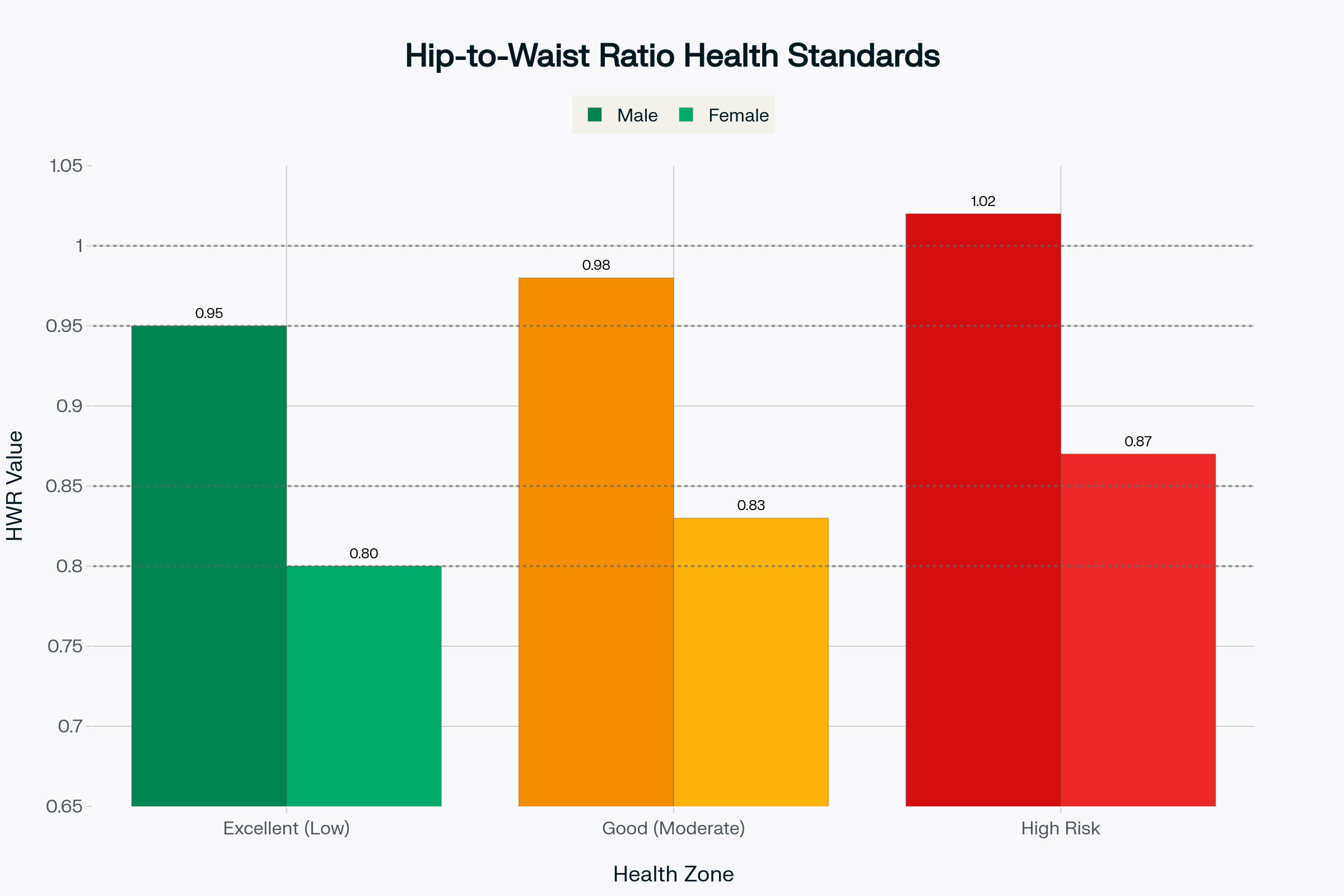
Health risk categories based on hip-to-waist ratio measurements
| Gender | Excellent (Low Risk) | Good (Moderate) | High Risk |
|---|---|---|---|
| Men | HWR ≤ 0.95 | HWR 0.96-1.0 | HWR > 1.0 |
| Women | HWR ≤ 0.80 | HWR 0.81-0.85 | HWR > 0.85 |
How to Measure Hips Correctly
Accurate Hip Measurement Technique
Step 1: Stand with feet together, weight evenly distributed
Step 2: Remove bulky clothing for accuracy
Step 3: Locate widest point of hips/buttocks (typically 7-9 inches below waist)
Step 4: Wrap tape measure around widest part, parallel to floor
Step 5: Keep tape snug but not compressing tissue
Step 6: Record measurement at end of normal exhale
Step 7: Measure 2-3 times and average for accuracy
Common Mistakes to Avoid:
• Measuring at hip bones instead of widest point
• Sucking in or flexing glutes (provides false reading)
• Tape not parallel to floor (angled measurements are inaccurate)
• Pulling tape too tight (compresses soft tissue)
• Inconsistent measurement location between sessions
⚕️ Medical Disclaimer
This ideal hip size calculator provides estimates based on anthropometric formulas and health research for educational purposes only. Results do not constitute medical advice, diagnosis, or treatment. Individual ideal hip measurements vary based on genetics, bone structure, ethnicity, body composition, age, and overall health status. Hip-to-waist ratio is a screening tool, not definitive diagnostic measure. Rapid or extreme body composition changes may indicate underlying health conditions or eating disorders. Sustainable muscle gain and fat loss require gradual, consistent approach. Consult with healthcare professionals, registered dietitians, or certified fitness trainers before starting any new diet or exercise program, especially if you have pre-existing medical conditions, hormonal imbalances, pregnancy considerations, or joint issues.
